Eco travel in Bukit Lawang.
Choose your pace.
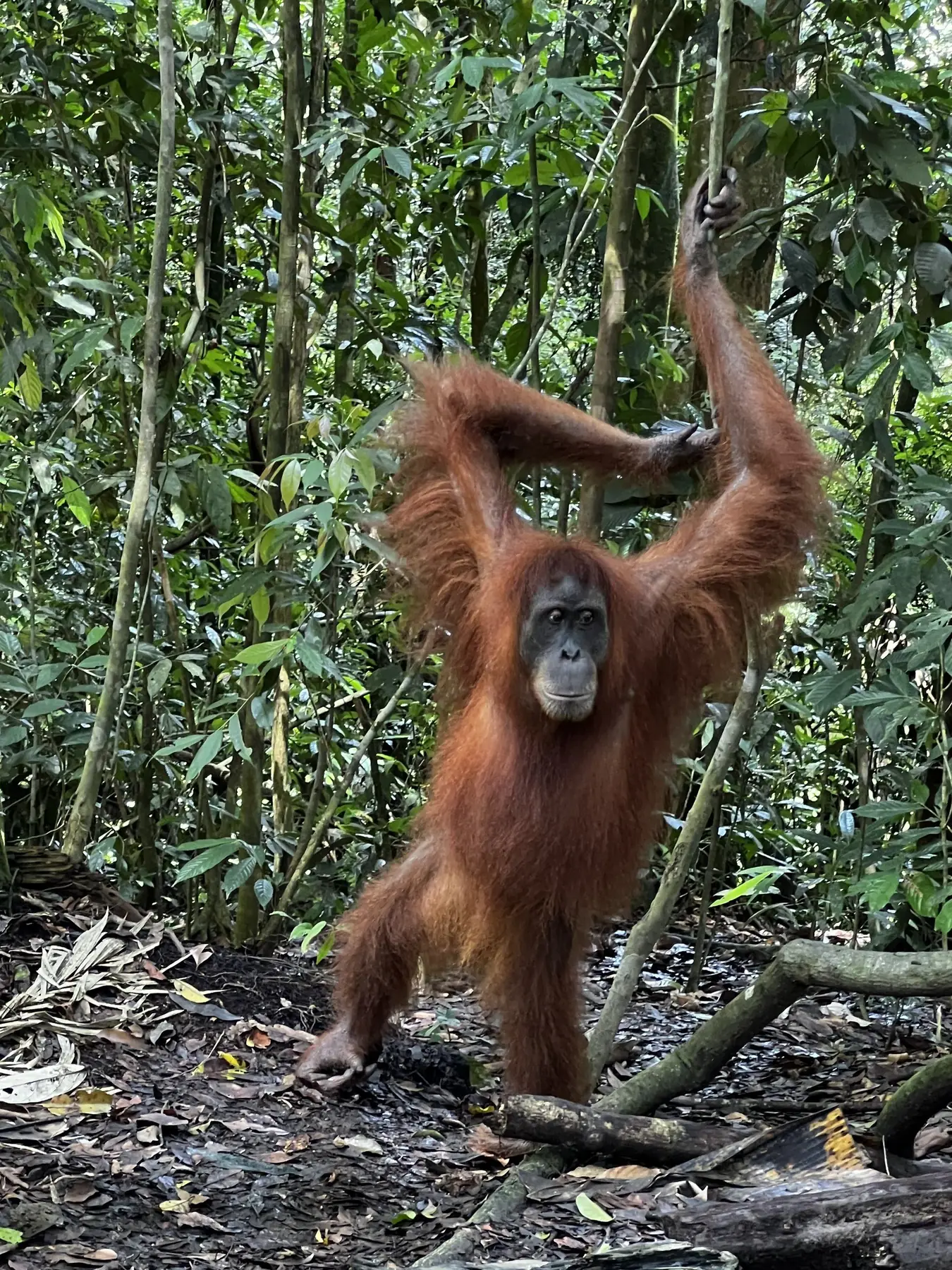
Eco Trails Sumatra plans ethical orangutan trekking with local crews, quiet wildlife observation, riverside camps, and a Bohorok River return at the edge of Gunung Leuser National Park.
Base
Bukit Lawang
Forest
Leuser Ecosystem
Routes
1-5 days
Trip rhythm / OPT-03
Arrive / Enter / Camp / Return
A slower pace for ethical orangutan observation.
The sequence is practical, not theatrical. Every phase gives the local crew more information about the group, the trail, and how wildlife is moving that day.
Arrive
Meet in Bukit Lawang. Confirm pace, food needs, pickup, and route conditions.
Enter
Move slowly while the local guide reads wildlife signs and manages group distance.
Camp
Settle at a simple riverside camp, eat with the crew, and listen to the forest.
Return
Follow the Bohorok River back toward the village by tube raft where the route allows.
Bukit Lawang jungle trekking routes & prices.
Compare 1- to 5-day Sumatra eco trekking routes, published prices, and trip rhythm, then let the local crew adjust the plan for weather, fitness, food needs, and current forest conditions.
Prices shown per person / confirm availability before travel
Canopy Introduction
A focused day on primary trails for travelers with limited time.
SRT-01
EUR 70
River Camp Immersion
One night beside the river, with more time to read the canopy.
MID-02
EUR 120
Deep Jungle Rhythm
RecommendedTwo camps, quieter wildlife tracking, and a complete rafting return.
OPT-03
EUR 170
Forest Traverse
A longer route through changing terrain and more remote forest.
EXT-04
EUR 250
Leuser Expedition
For experienced hikers seeking the deepest published route.
MAX-05
EUR 320
Need more than five days? Longer routes are planned only after discussing route depth, safety, weather, food logistics, guide availability, and conservation restrictions.
Discuss 10+ Days
Observation, not performance
Ethical wildlife viewing rules in Gunung Leuser.
Ethical trekking is a set of observable choices. The guide manages distance, sound, group position, and whether the group should wait or move on.
No feeding or touching
Wildlife remains wild; food and staged contact change behavior.
Small local crew
Group pace and trail position stay easier to manage.
Quiet observation
The goal is time in the habitat, not a guaranteed photo checklist.
Low-impact return
Where conditions allow, the river becomes the final route back.
Community-led ecotourism and rainforest conservation.
Local work and conservation are not separate footnotes. They shape who guides the route, what guests learn, and how the forest border is cared for over time.
See Community & ConservationLocal crew
Guides, cooks, porters, and river teams from Bukit Lawang and nearby villages.
Forest patrols
Bookings contribute directly to local work protecting the forest edge.
One hectare
A conservation plot beside protected forest supports restoration and buffer planning.
Field notes
Guest observations can contribute useful records for local researchers.
Sumatra jungle trek planning & field guides.
Arrival, season, packing, and ethical expectations all affect how comfortably the group can move.
Medan Airport to Bukit Lawang
Transfer choices, timing, luggage, and what to expect after landing.
Best Time to Visit
Rain, trail conditions, demand, and how fixed dates affect planning.
Jungle Trek Packing List
What helps in heat, mud, rain, camp, and river conditions.
Ethical Orangutan Trekking
No feeding, no touching, careful distance, and quieter encounters.
Frequently asked questions about eco travel in Bukit Lawang.
If your situation is different, WhatsApp is the fastest way to get a route recommendation grounded in real conditions.
Ask Your QuestionQ01Will we definitely see orangutans?+
No wildlife encounter can be guaranteed. Local guides read current forest signs and choose routes carefully, but the animals remain wild and the group follows their movement rather than staging it.
Q02Which route is best for a first visit?+
The 3-day route offers the strongest balance of wildlife time, two simple camps, slower pacing, and a rafting return. Shorter routes are useful when your schedule or fitness needs a lighter plan.
Q03What should I send on WhatsApp?+
Share your preferred date, group size, arrival plan, hiking experience, food needs, and any knee, ankle, heat, or mobility concerns. That is enough for the local crew to recommend a realistic route.
Q04Can you arrange longer trekking?+
Yes. Routes of 10 days or longer require a direct discussion about fitness, weather, food logistics, guide availability, safety, conservation restrictions, and price.